




Lighting is one of the most controlled elements within a trade show booth, yet it is often treated as a final detail rather than a design decision. In practice, trade show booth lighting shapes how a space is noticed, how products are viewed, and how long visitors stay.
Exhibition halls are typically uniform in brightness. Overhead lighting is for general visibility, not brand distinction. As a result, booths that rely only on venue lighting tend to blend into the background. Purposeful lighting helps separate one exhibit from another without altering the structure itself.
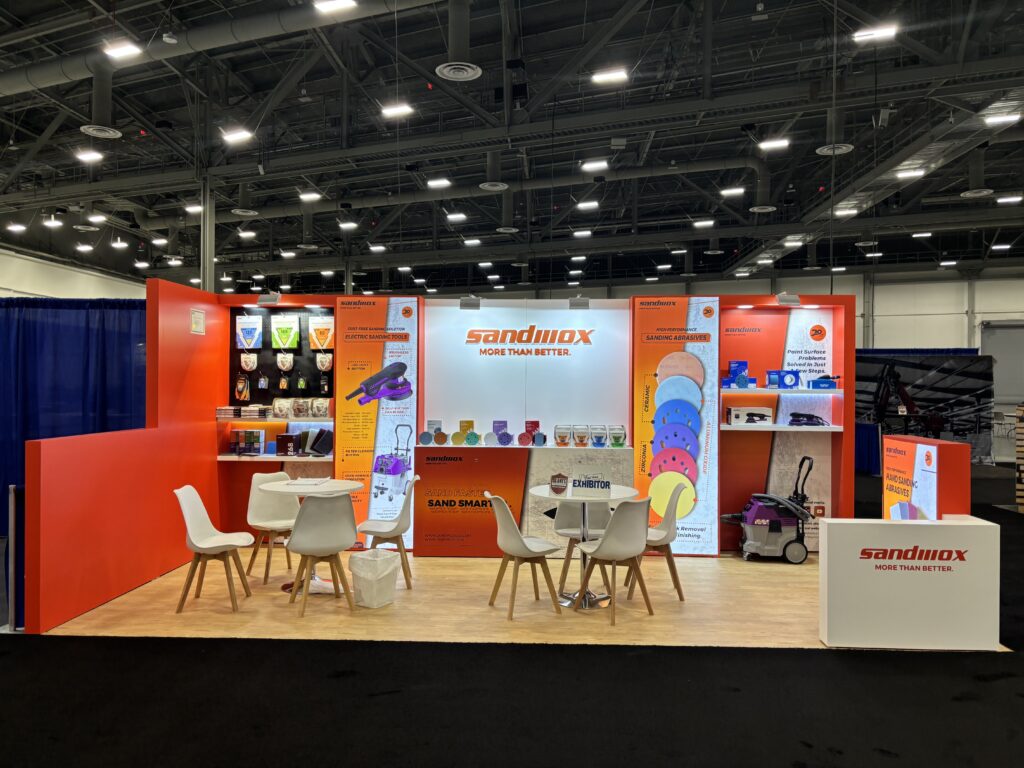
Table of Contents
Well-lit booths are noticeable in a crowded hall. Directional lighting can highlight areas of importance, such as product displays or signs, to make it easier for visitors to see what the booth is offering from a distance.
Also, lighting may affect the flow of individuals in space. Areas with more lighting often attract more attention, while softer lighting may be used to designate quiet areas for talking. This creates a flow without using physical barriers.
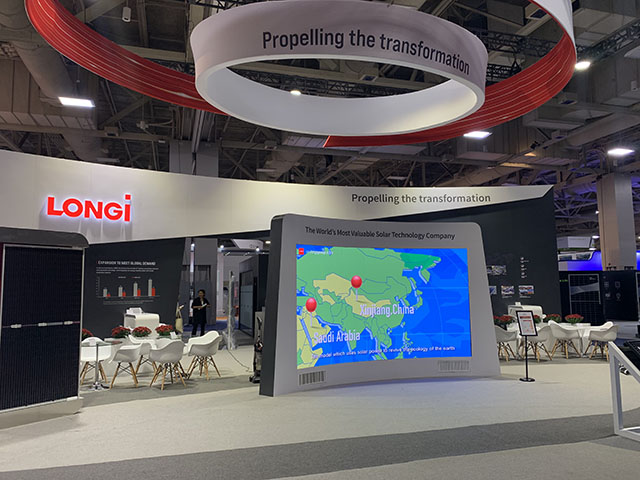
Different lighting tones and intensities affect how colors and materials appear. Warm lighting may suit hospitality or lifestyle brands, while cooler tones often align with technology or industrial products.
Ambient lighting is used for general lighting in the booth. It is used for visibility but not for highlighting particular features. Most venues have this form of lighting, so it is usually used as a base layer.
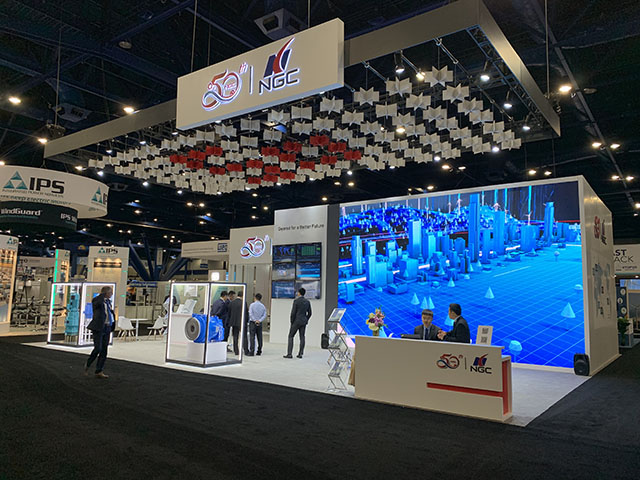
Accent lighting is used for trade shows. It is used for highlighting particular features in the booth. Some of the accent lighting used include spotlights or track lighting.
Task lighting is used in booths where certain activities are performed. It is used for improving visibility but not for increasing the brightness in the booth.
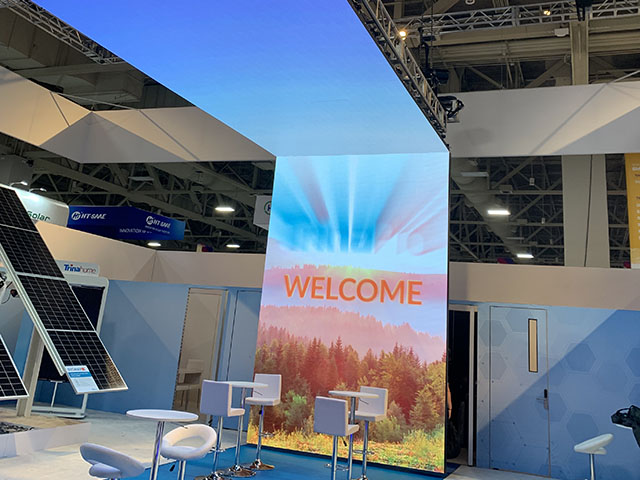
Backlighting is used in most modern booths. It is used for illuminating graphics in booths. LED is used in most cases because of its low heat emission.
Over-lighting reduces contrast and makes the booth appear flat. Instead, focus on:
This creates visual hierarchy without overwhelming the space.
Use Consistent Color Temperature
Combining warm and cold lighting can produce inaccurate and uneven results. Using consistent lighting helps maintain brand and product accuracy.
Avoid Glare and Harsh Shadows
The lighting should be placed so that it does not reflect off the screen. Angling lighting avoids this problem.
Consider Power and Venue Limits
There are power restrictions in every venue. Proper lighting planning helps ensure that all lighting functions properly.
Lighting behaves differently in a large exhibition hall compared to a controlled environment. Testing helps identify adjustments needed for brightness, angles, and placement.
These issues can all decrease the level of clarity rather than increasing it.
TrueBlue Exhibits approaches trade show booth lighting design as part of the overall layout, not as a separate layer.
This involves:
Such planning helps avoid uneven lighting or last-minute adjustments during installation.
For exhibitors attending multiple events, TrueBlue Exhibits supports scalable lighting strategies that can adapt across venues.
This may include:
This approach reduces the need to redesign lighting for every event while maintaining a stable brand appearance.
Lighting does not directly create engagement, but it supports conditions where engagement is more likely.
In this way, lighting works alongside layout, messaging, and staff interaction rather than replacing them.
What type of lighting is best for a trade show booth?
The best type of lighting for a trade show booth is a combination of ambient, accent, and backlighting. Each type of lighting serves a special purpose, which helps to balance the trade show booth.
How can the use of lighting increase trade show engagement?
Lighting can increase trade show engagement by increasing the visibility of the trade show booth. When visitors can easily see what the trade show booth is offering, they are more likely to engage with it.
Are LED lights appropriate for trade show booth use?
Yes, LED lights can be used for trade show booth use because they produce less heat, use less electricity, and provide consistent brightness.
How can you prevent glare with trade show booth lighting?
To prevent glare, you should place your trade show booth lights at an angle instead of directly in front of visitors.
Does lighting use affect product appearance?
Yes, using lighting can affect product appearance.
The trade show booth lighting is one of the functional aspects of the exhibit design. It determines visibility and how space is used. Lighting does not change the structure of the exhibit.
The lighting arrangement of the trade show booth does not depend solely on the lighting. The lighting arrangement should be such that it provides contrast and uniformity. The lighting arrangement with the overall design and message of the trade show booth helps in the effective communication of the trade show booth.
 We Do It Right, The First Time and Every Time
 3D Booth Rendering
 Always Go
 Win-Win Happy
 Everything
  Committed
  Customer
 Clockwork