
TEL : 702-445-8294
EMAIL : Info@trueblue-exhibits.com Based in Las Vegas, Serving Trade Shows Across the U.S.


When planning a trade show booth, flooring usually isn’t the first thing that comes to mind.
Most companies focus on the booth structure, graphics, lighting, furniture, and technology. Flooring often gets chosen later, almost as if it were just something to put down before the show starts.
But flooring affects much more than appearance. It can make your booth more comfortable, help define different areas, hide cables, support technology, and change how the lighting and overall design look.
For a large 20×30 or 30×30 corporate exhibit, flooring should be considered as part of the design from the beginning—not an afterthought.
Table of Contents
The right flooring depends on what will happen inside the booth.
If hundreds of people will walk through, durability matters. If your team will spend hours standing and talking with visitors, comfort matters too.
You also need to consider what you’re putting on the floor. A large LED video wall, product demonstration, meeting area, or hospitality lounge may have different flooring requirements than a simple reception space.
Looking at these details early makes it much easier to choose the right flooring.
Carpet remains one of the most common trade show flooring options because it’s comfortable, versatile, and works with almost any booth design.
If your staff will be standing for most of the day, having a softer surface underfoot can make a noticeable difference.
Color can also help shape the booth. Darker carpet can create a more formal look, while lighter shades can make the space feel more open. In a large exhibit, different carpet colors can even help separate meeting or hospitality areas from the main visitor space.
Premium vinyl can give a corporate booth a more polished, architectural feel.
Wood-look, stone-style, and other finishes can work particularly well with modern booth designs. Vinyl can also create a polished, finished appearance.
The key is making sure the flooring works with the rest of the booth. If the floor, graphics, lighting, and furniture are all competing for attention, the space can quickly feel too busy.
Raised flooring can be especially useful in large, technology-heavy exhibits.
One major advantage is cable management. LED video walls, monitors, computers, lighting, charging stations, and interactive displays all require power. Raised flooring provides space underneath for routing those cables without leaving wires across the visitor path.
Raised flooring can also help create different levels within the booth. A slightly raised product display or demonstration area can naturally draw attention without adding another wall or structure.
Visitors may spend a few minutes in your booth, but your staff could be standing there for hours.
That’s why comfort shouldn’t be overlooked.
Carpet and cushioned flooring can make long days more comfortable, especially around reception counters, product demonstrations, and areas where staff members spend most of their time.
For larger booths, you can also combine flooring types to balance comfort, appearance, and function.
Trade show flooring has to handle a lot of activity.
People are constantly walking through, equipment is moved around during setup, and furniture may be repositioned throughout the event.
Pay particular attention to high-traffic areas such as the main entrance, reception area, demonstration zones, and paths between different sections of the booth.
The flooring should maintain its appearance throughout the event, not just on the first morning.
Your floor doesn’t need a giant logo printed across it to feel branded.
Color and material can be enough.
A neutral floor can let bold graphics stand out, while a distinctive finish can reinforce a modern or premium look. In a larger booth, changing the flooring underneath a lounge or meeting area can also make that space feel separate without using physical walls.
Lighting can completely change how flooring looks.
Glossy surfaces may reflect overhead lights or LED displays, while matte finishes tend to create a softer appearance. Dark flooring can create a more dramatic feel, while lighter flooring can make a space look brighter and more open.
This becomes particularly important in large corporate exhibits with architectural lighting and LED features.
Plan the flooring and lighting together so you don’t end up with unwanted reflections or glare.
Cable management isn’t the most exciting part of booth design, but it can make a huge difference to the finished space.
Think about everything that needs power—LED walls, monitors, computers, lighting, charging stations, and product demonstrations.
If cables are planned from the beginning, they can often be routed underneath raised flooring or through carefully designed pathways.
Leaving this until installation can result in visible cables crossing areas where visitors are walking.
Large LED video walls require careful planning because of their size, weight, power requirements, and supporting equipment.
The flooring needs to work with the LED structure while allowing space for necessary wiring and connections.
The same applies to large monitors, interactive displays, and product demonstrations.
TrueBlue Exhibits can coordinate flooring, cable management, lighting, and LED video walls as part of the overall exhibit design rather than treating them as separate decisions.
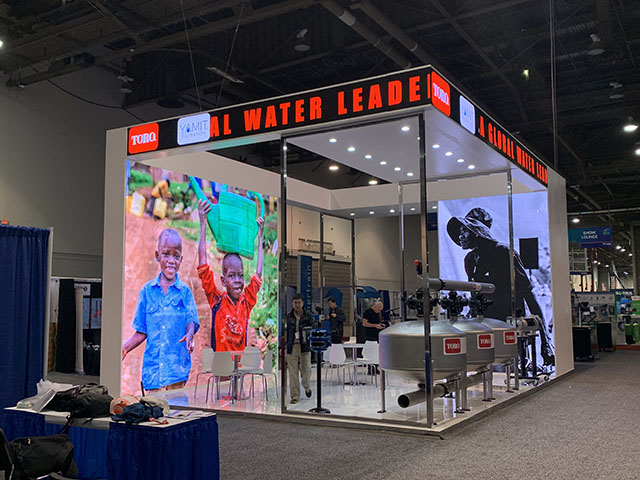
A 30×30 booth provides 900 square feet, giving you room for multiple areas —product demonstrations, meeting areas, hospitality, reception, and technology.
Flooring can help organize those areas without making the booth feel closed off.
For example, premium vinyl could be used throughout the main visitor area, while carpet creates a more comfortable meeting space. A raised platform could then highlight a product or digital display.
A 20×30 booth can use the same approach on a smaller scale, depending on the layout and requirements.
Just don’t use too many different materials. A few coordinated finishes usually work better than trying to make every section completely different.
The biggest reason to choose flooring early is that it affects so many other design decisions.
It can influence furniture placement, visitor flow, cable routing, lighting, technology installation, and how different areas of the booth are separated.
If you wait until the end, you may have to compromise on the flooring—or worse, redesign parts of the booth to accommodate it.
When flooring is considered during the initial design, everything can be planned together.
TrueBlue Exhibits can incorporate flooring into the wider exhibit design, whether you’re creating a 20×30 booth with a few focused areas or a 30×30 exhibit with multiple meetings, demonstrations, hospitality spaces, and LED displays.

It depends on the booth. Carpet is comfortable and versatile, premium vinyl offers a more polished appearance, and raised flooring can be useful for cable management and technology.
It can be, especially when the exhibit includes LED video walls, monitors, lighting, or other technology that requires extensive cabling.
Yes. Different finishes can help define meeting areas, demonstrations, and hospitality spaces while keeping the overall booth open.
Yes. Flooring should be planned alongside the LED structure, electrical requirements, and cable routing.
TrueBlue Exhibits can incorporate carpet, premium vinyl, raised flooring, and other flooring solutions into corporate trade show exhibit designs.
Flooring may not be the first thing visitors notice, but they’ll experience it as soon as they step into your booth.
It affects comfort, durability, movement, lighting, cable management, and the overall appearance of the exhibit.
For large 20×30 and 30×30 booths, those details matter even more. The right flooring can help create clear areas for meetings, demonstrations, hospitality, and product displays while keeping the technology and wiring organized.
Most importantly, don’t leave flooring until the end. Plan it alongside the booth structure, lighting, furniture, technology, and visitor flow.
TrueBlue Exhibits can incorporate these elements into a cohesive corporate exhibit designed for comfort, functionality, and a consistent appearance throughout the show.
 We Do It Right, The First Time and Every Time
  3D Booth Rendering Always Go Win-Win Happy Everything Committed Customer Clockwork
