




Choosing the right trade show booth builder can be challenging. There are plenty of companies offering booth design and construction, and at first glance, many of them seem to offer the same thing.
But a trade show booth is a lot more than a nice-looking structure. You need somewhere for your team to meet prospects, space to show your products, branding that people can actually see across the show floor, and a setup that works from the moment the event opens until the last visitor leaves.
And then there are all the things attendees never see: fabrication, freight, installation, dismantling, storage, and dozens of deadlines in between.
If you’re exhibiting at a major Las Vegas event, freight coordination, venue requirements, move-in schedules, and installation timelines can make those details even more important. So before choosing a booth builder, here are the things we’d recommend looking at.
Table of Contents
First, look at what the company has actually built.
If you’re investing in a large corporate exhibit, you don’t want your project to be the biggest booth the builder has ever attempted. Look for experience with exhibits similar to yours, particularly in terms of size and complexity.
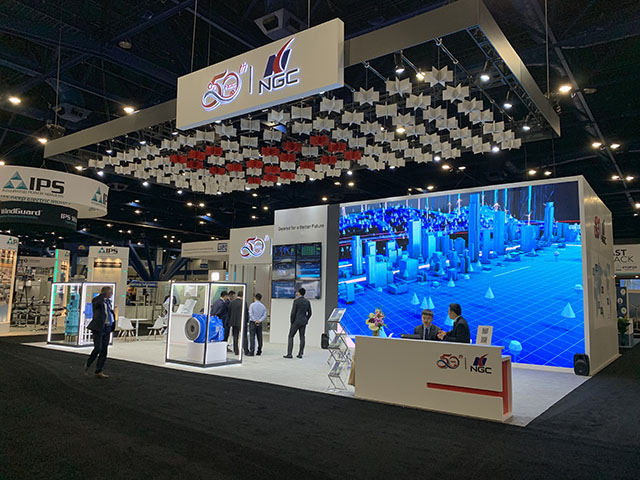
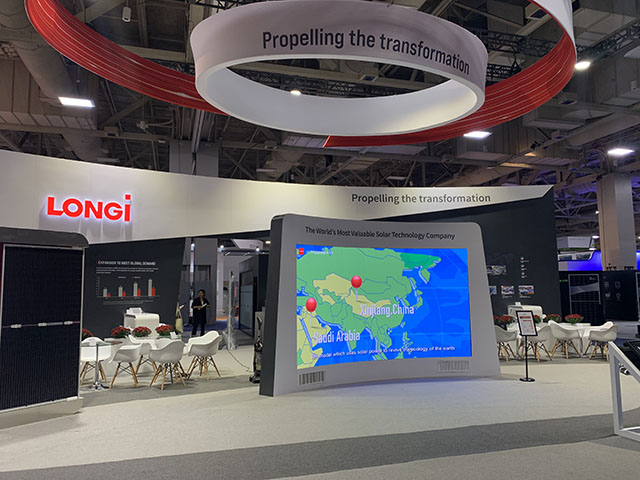
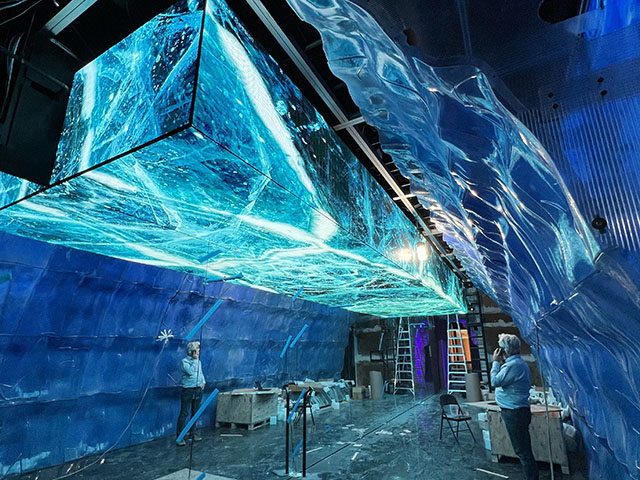
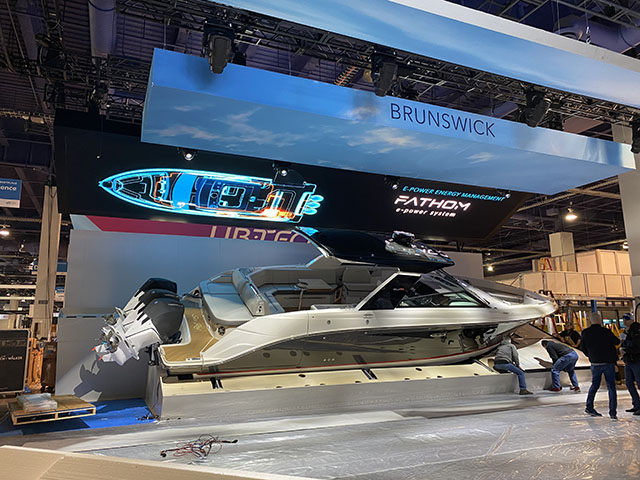
Large booths can involve private meeting rooms, product demonstrations, hospitality areas, storage, hanging signs, LED displays, and interactive technology. Each element requires careful coordination, and an experienced builder should be able to manage those moving parts from design through installation.
The Las Vegas experience is useful, too. Major conventions can have strict move-in schedules, freight procedures, and venue requirements that an experienced builder will already be familiar with.
A good booth shouldn’t look like it could belong to any company.
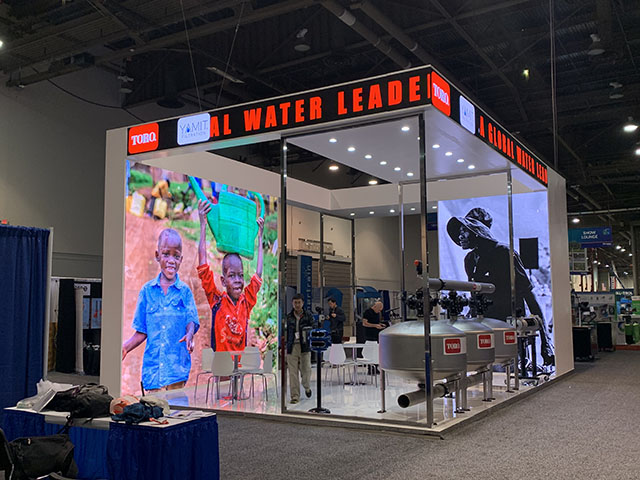
The design needs to reflect who you are, what you sell, and what you want people to remember after they leave. You may need a large product demonstration area, private meeting space, or a highly visible design built around strong branding and digital content.
TrueBlue Exhibits can develop a custom exhibit around those requirements rather than relying on a standard layout
But don’t judge a design only by how impressive it looks in a rendering. Ask yourself a practical question: Will this actually work when 20, 50, or 100 people are in the booth?
Trying to understand a large booth from a two-dimensional floor plan isn’t easy.
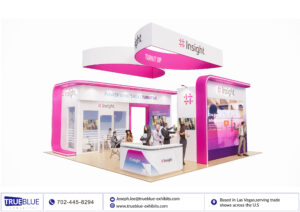
That’s why 3D renderings are so useful. They give you a much better idea of what the finished exhibit will look like and, just as importantly, how it will feel to walk through.
You’ll be able to see where your logo goes, how visible the graphics are, where people will sit, how products are displayed, and whether the meeting areas feel private enough.
It’s much easier to move a wall or change a layout on a screen than it is after the booth has already been fabricated.
A beautiful concept is great, but eventually someone has to build it.
Take a close look at a builder’s previous work. Are the finishes clean? Do the graphics look professionally installed? Does the structure feel substantial? Are lighting and technology neatly integrated?
It’s worth asking about the fabrication process, too. Understanding who is actually building the booth and how quality is checked can give you a better idea of what to expect when the exhibit arrives at the show.
Not every company needs to own its booth.
If you’re exhibiting at different shows with different booth sizes, or you like changing the design from one event to another, rental exhibits can be a practical option. Renting can also make sense if you don’t want to deal with long-term ownership and storage.
On the other hand, companies that attend many events with similar requirements may prefer to invest in a custom exhibit they can reuse.
There isn’t one right answer. A good booth builder should help you compare both options instead of automatically pushing you toward one.
TrueBlue Exhibits offers both custom and rental exhibit solutions, making it possible to choose an approach based on the way your company actually exhibits.
Your graphics play an important role in attracting attention and communicating your message.
They’re usually the first thing people see, and they need to communicate your brand and message quickly. If the printing quality is poor, the colors don’t match your brand, or the main message is impossible to read from a distance, even an expensive booth can lose some of its impact.
Ask about the materials, printing quality, installation, color matching, and how graphics are incorporated into the design.
The best graphics aren’t simply added at the end. They’re considered as part of the booth from the beginning.
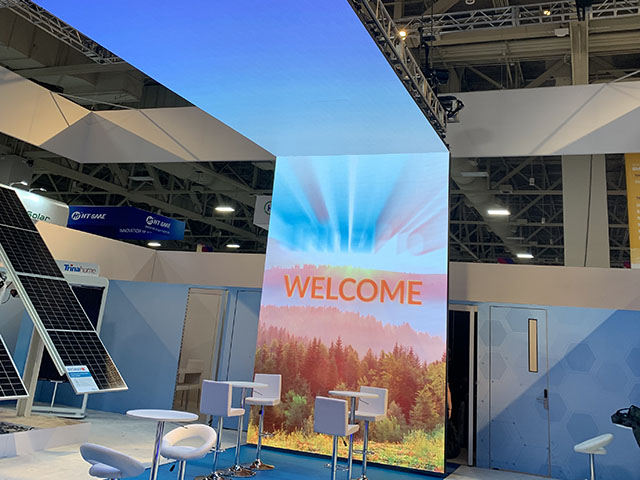
If you’re planning to use an LED video wall, interactive screen, digital signage, or another technology feature, make sure your booth builder understands how that technology needs to work within the overall booth design.
Technology affects the entire layout. A screen needs the right viewing distance, power, mounting, content, and placement. It also shouldn’t block your product displays or make it difficult for visitors to move around.
TrueBlue Exhibits can integrate LED and digital elements into custom exhibit designs so they work as part of the overall experience rather than feeling like an afterthought.
This is one of those things that doesn’t seem important until something goes wrong.
There can be a surprising number of people involved in a trade show project: designers, fabricators, graphic teams, freight companies, installers, technology providers, and venue teams.
Having a dedicated project manager gives you one person who knows what’s happening and what needs to happen next.
You shouldn’t have to spend the week before the show contacting multiple vendors just to find out whether your booth has shipped.
Once the booth is built, it still has to get to the convention center.
Find out who is handling freight and transportation and how delivery is being coordinated with the venue.
This is particularly important in Las Vegas, where major shows can bring enormous amounts of freight into convention facilities within relatively short move-in windows.
Having transportation coordinated as part of the overall project can simplify logistics and reduce the number of vendors your team needs to manage.
Your booth needs to be fully installed, finished, and ready before the show opens.
Ask whether the builder provides installation, dismantling, and on-site support. If something goes wrong with a light, graphic, structure, or digital display, having someone available to help can be invaluable.
When the show ends, the booth still needs to be dismantled, transported, and prepared for its next use or storage.
If you’re buying your exhibit, storage is something you should discuss before signing the contract—not after the show.
Proper storage protects your booth components between events and can make the next show much easier to prepare for.
If you’re renting, confirm what is included after the show, including dismantling, transportation, and any post-show services.
A company’s website will naturally show its best work. That’s why it’s worth going a little further.
Look through the portfolio and focus on projects that resemble what you’re planning. A builder might have beautiful photographs of small displays, but that doesn’t necessarily tell you whether they can handle a 30×30, 40×40, or larger corporate exhibit.
Reviews can also reveal things photographs can’t: whether the company communicates well, meets deadlines, handles problems, and supports clients during the actual event.
If you’re heading to Las Vegas, look for previous experience with major shows and convention venues.
Trade show projects move quickly. Decisions need to be made, approvals need to happen, and deadlines can’t usually be moved just because someone missed an email.
Your builder should be easy to reach and straightforward about timelines, costs, changes, and potential problems.
Good communication doesn’t guarantee that nothing will go wrong. It does mean you’re much more likely to know about a problem early enough to fix it.
Finally, look at how many pieces of the project the builder can manage.
Having one company coordinate design, 3D renderings, fabrication, graphics, rental options, LED and digital integration, transportation, installation, dismantling, storage, and on-site support can make the entire process simpler.
You have fewer vendors to chase and a clearer person or team responsible for the overall project.
That’s especially helpful for a large Las Vegas exhibit, where there are already plenty of other details competing for your attention.
Look for relevant experience, a strong portfolio, custom design capabilities, 3D renderings, quality fabrication, reliable project management, good communication, and services covering logistics, installation, dismantling, and storage.
There isn’t a universal price. Booth size, design, materials, graphics, furniture, technology, transportation, labor, and installation all affect the final cost. A good builder should provide a quote based on your actual requirements.
It depends. Buying can make sense if you attend many shows and have consistent requirements. Renting can be a better fit when you attend different events, use different booth sizes, or want more flexibility.
Yes. Many experienced builders provide transportation, installation, dismantling, and other services for Las Vegas events. It’s worth asking about experience with your specific show and venue before making a decision.
A 3D rendering lets you see and adjust the booth before anything is built. It can help you catch layout, branding, meeting-space, or visibility issues early.
Yes. LED video walls and other digital features can be incorporated into custom exhibits. Their size and placement should be planned around the booth layout, viewing distance, content, and visitor flow.
Yes. TrueBlue Exhibits provides custom and rental exhibits along with graphics, LED and digital integration, project management, transportation, installation, dismantling, storage, and on-site support.
Choosing a trade show booth builder is really about choosing a partner for one of your company’s biggest marketing moments.
You want someone who can create a booth that looks good, but you also need someone who understands what happens behind the scenes—from fabrication and freight to installation, technology, dismantling, and storage.
For Las Vegas trade shows, that experience can be particularly valuable because of the size and complexity of many events.
TrueBlue Exhibits brings these services together, helping companies take an exhibit from the initial idea all the way to the finished booth on the show floor.
In the end, don’t simply choose the builder with the biggest portfolio or the lowest quote. Choose the one that understands your goals, communicates with you, has experience with projects like yours, and can make the entire trade show process easier.
 We Do It Right, The First Time and Every Time
 3D Booth Rendering
 Always Go
 Win-Win Happy
 Everything
 Committed
 Customer
 Clockwork