




Planning a large trade show booth involves more than choosing a booth size and putting your logo on the wall. You also need to think about how visitors will move through the space, where your team will meet prospects, how products will be demonstrated, and how everything will get to the show floor on time.
That’s why trade show booth rentals can be a practical option for many companies. You can create a booth customized to your brand without taking on the long-term responsibility of owning and storing an entire exhibit.
And a rental exhibit doesn’t have to mean basic. A rental booth can include custom graphics, LED video walls, product displays, meeting areas, premium flooring, furniture, storage, and other branded features.
The key is figuring out what your booth actually needs before you start designing it.
Table of Contents
Before choosing graphics or furniture, think about how much space your company really needs.
Consider your expected visitor traffic, the number of staff members working the booth, how many products you’ll display, and how much room you need for meetings or demonstrations.
Two common choices for larger corporate exhibitors are 20×30 and 30×30 trade show booths.
A 20×30 booth provides 600 square feet. With a smart layout, that can be enough for reception, product displays, seating, storage, graphics, technology, and a meeting area.
It’s a good option when you want a substantial presence without committing to a very large footprint.
A 30×30 booth gives you 900 square feet, giving you an additional 300 square feet of space.
That extra room can be helpful if you need multiple meeting areas, larger product demonstrations, a hospitality lounge, additional storage, or several product displays.
Still, bigger isn’t automatically better. The right booth size is the one that gives your team enough room to accomplish its goals without paying for space you won’t use.
Another early decision is whether to rent your exhibit or purchase a custom booth.
Buying can make sense for companies that attend many shows and use similar booth sizes and layouts. However, ownership also means handling storage, transportation, maintenance, repairs, and future modifications.
Renting offers more flexibility. You can change the layout, size, branding, and features depending on the event without having to own and store every component.
For companies exhibiting in different cities or attending shows with different space requirements, that flexibility can be useful.
TrueBlue Exhibits offers rental exhibit solutions that can be customized with company branding, graphics, furniture, technology, meeting spaces, and other exhibit elements.
Once you know the footprint, think about what happens when someone walks into the booth.
Where will they go first? What should catch their attention? Where will they see your products? Where can they sit and talk with your team?
A good booth should have a natural flow between reception, displays, demonstrations, meeting areas, and hospitality spaces.
Open space matters, too. A booth may look great in a rendering but feel crowded once several visitors and staff members are inside.
Design for the real trade show environment, not just the empty booth before the show opens.
Trade show floors are busy. Your branding needs to work from a distance, not only when someone is standing directly in front of the booth.
Large graphics, overhead signage, branded architectural elements, counters, and digital displays can help make your company easier to spot.
That doesn’t mean covering every surface with branding. A clear message, strong visuals, and a simple hierarchy will usually communicate more effectively than a booth filled with text.
Trade show graphics should do more than make the booth look finished.
Use them to introduce your company, explain a product, highlight a service, or communicate a key campaign message.
Custom graphics are also one of the easiest ways to make a rental exhibit feel like it belongs to your brand. The structure may be rented, but the visuals can be completely tailored to your company.
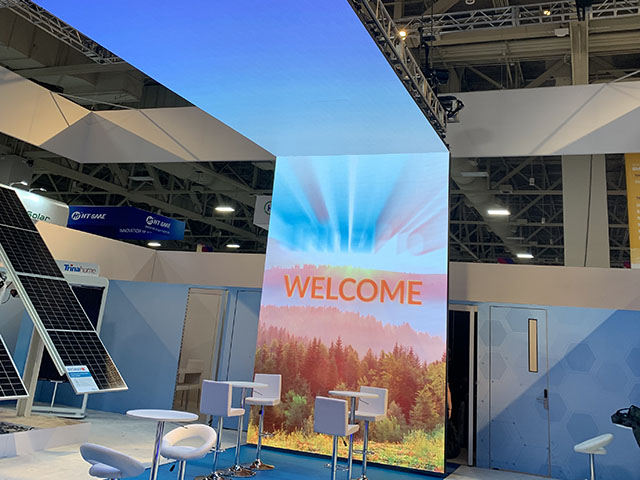
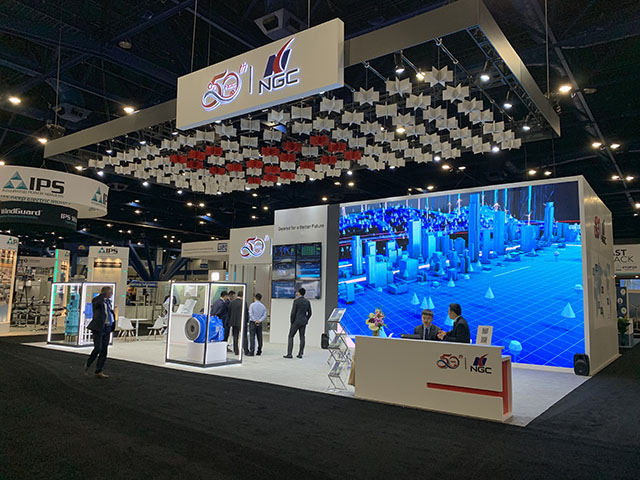
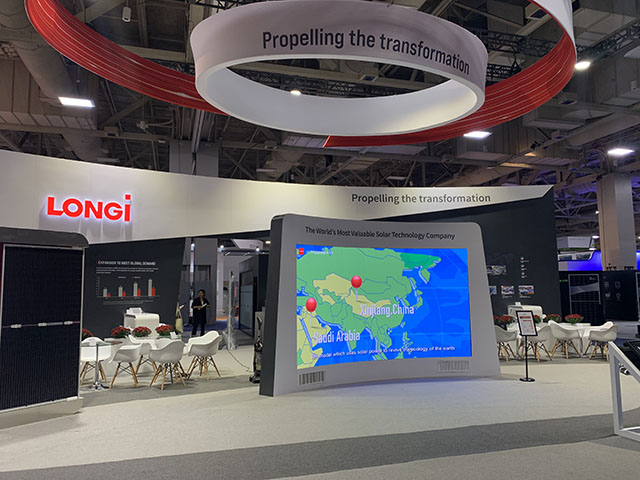
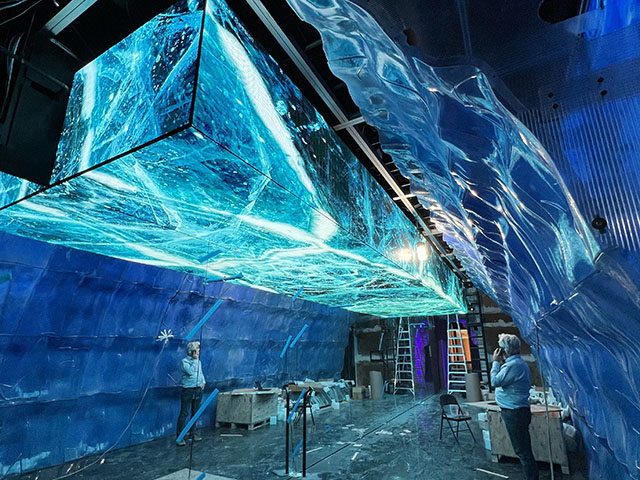
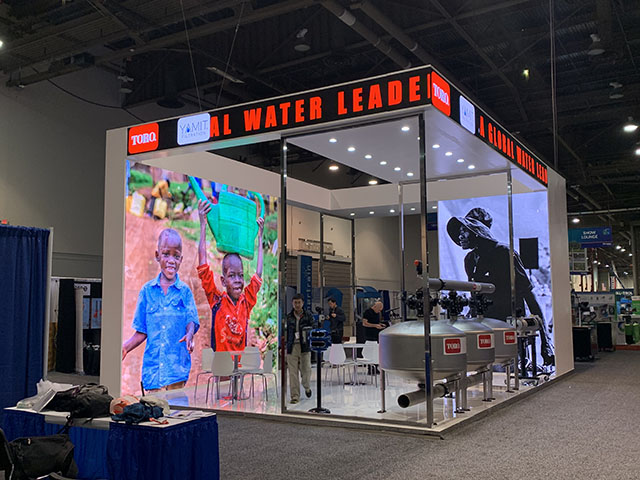
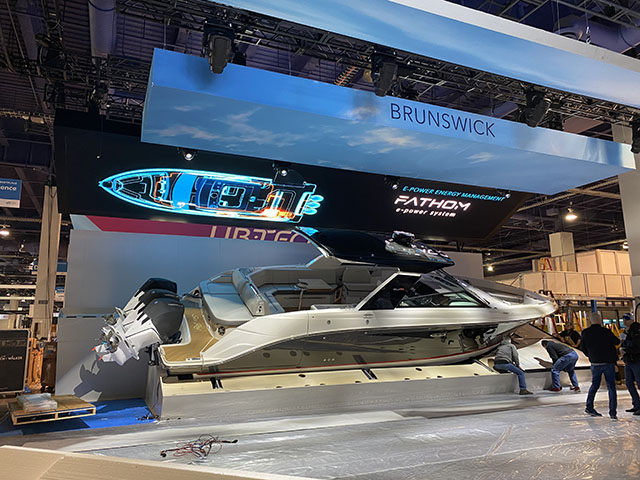
LED video walls can create a strong focal point in a corporate booth. They can showcase product demonstrations, videos, presentations, software, customer stories, or other visual content.
A 20×30 booth might use one large screen as its main visual feature, while a 30×30 booth gives you more flexibility for larger or multiple displays.
The important thing is to have a reason for using the technology. An LED wall should contribute to the visitor experience rather than simply taking up space.
TrueBlue Exhibits can incorporate LED video walls and digital elements into rental exhibit designs as part of the overall booth layout.
Flooring can significantly influence the look and feel of a large booth. Carpet, vinyl, wood-look flooring, or a raised platform can help define different areas and give the space a more finished appearance.
Furniture should be chosen around how your team will actually use the booth. Café tables may work for quick conversations, while comfortable chairs and proper tables are better for longer meetings.
If hospitality is important, a larger booth may also have room for a lounge where visitors can sit and talk.
If meetings are an important part of your trade show strategy, plan for them from the start.
A 20×30 booth can often accommodate a private or semi-private meeting area. A 30×30 footprint gives you more flexibility for multiple meeting spaces or a dedicated conference area.
Product demonstrations need planning, too. You need room for the product, the presenter, and visitors gathering around to watch. If you expect several people to stop, make sure the demonstration doesn’t block the entrance or create a bottleneck.
A booth still has to get to the show.
Freight, transportation, delivery schedules, venue rules, move-in deadlines, installation, and dismantling all need to be coordinated.
This is particularly important for large exhibits and major trade shows where move-in and move-out windows can be tight.
A full-service exhibit provider can simplify the process by coordinating design, production, transportation, installation, and dismantling as part of one project.
Getting a visitor’s contact information is only the beginning.
Your booth should make it easy for people to engage with your team through clear messaging, demonstrations, knowledgeable staff, and comfortable conversation areas. QR codes, digital forms, appointment scheduling, and other lead-capture tools can also help.
More importantly, decide before the show what happens to those leads afterward.
Effective follow-up is where much of the value of a trade show can be realized. Sort contacts based on interest and make sure the right salesperson receives the information.
A personal follow-up that references the conversation someone had at your booth is much more useful than a generic email sent to everyone.
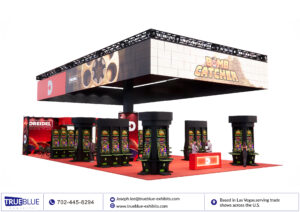
Yes. Rental exhibits can include large footprints, meeting areas, product displays, hospitality spaces, custom graphics, LED video walls, flooring, furniture, and other branded features.
It depends on your needs. Buying can make sense if you attend frequent shows with similar requirements. Renting offers more flexibility when booth sizes, locations, or designs change.
Yes. Both footprints can be created as rental exhibits, depending on the provider, design, and level of customization required.
Yes. Custom graphics can give a rental booth a unique look and keep the exhibit consistent with your brand.
Yes. LED video walls can be incorporated when the booth structure and design are planned to support them.
This depends on the exhibit provider. A full-service company can coordinate transportation, installation, dismantling, and other logistics as part of the project.
Yes. TrueBlue Exhibits provides rental exhibit solutions that can include custom graphics, furniture, flooring, meeting areas, product displays, LED video walls, and other branded features.
A rental booth doesn’t have to feel temporary or generic. With thoughtful planning, it can be customized around your brand, products, team, and visitors while giving you more flexibility from one event to the next.
Start by choosing a booth size that makes sense for your goals. Then think about the details that make the space work: branding, graphics, technology, flooring, furniture, meetings, demonstrations, and hospitality.
Don’t forget the parts visitors never see, either. Freight, installation, dismantling, lead capture, and follow-up all play a role in the success of your trade show investment.
TrueBlue Exhibits provides rental and custom exhibit solutions that can include design, graphics, LED integration, logistics, installation, dismantling, and post-show support.
The right rental booth isn’t necessarily the biggest or most technologically advanced. It’s the one that gives your team the right environment to meet people, start meaningful conversations, showcase your products, and turn trade show traffic into real opportunities.
 We Do It Right, The First Time and Every Time
 3D Booth Rendering
 Always Go
 Win-Win Happy
 Everything
 Committed
 Customer
 Clockwork