
TEL : 702-445-8294
EMAIL : Info@trueblue-exhibits.com Based in Las Vegas, Serving Trade Shows Across the U.S.


The concepts of trade show booth design follow a pattern in how organizations seek to gain attention and facilitate interaction with their visitors. Creativity in trade show booth design is not a guarantee of success, but there are certain elements in design that are common when interaction seems higher.
Observations of these commonalities in multiple trade show events provide a basis for identifying creative concepts in trade show booth design. The following discussion will examine twenty concepts commonly found in trade show booth design and how they work.

The concepts presented are not a guarantee of success and are not a basis for evaluation, but they are simply commonalities found in trade show booth design.
Table of Contents
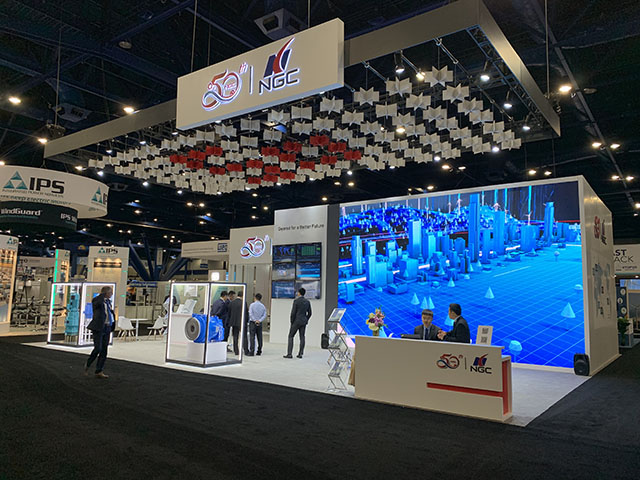
Spatial layering organizes display elements in depth. In this pattern, taller structures sit at the rear, while lower surfaces occupy the front. This arrangement appears to shape sightlines and delineate zones for discussion and demonstration. Layered visuals create a sequence of attention points, leading visitors from one area of the booth to another.
Color and contrast contribute to visual hierarchy. Bold color fields tend to attract the eye from a distance, while subtler tones draw closer inspection. Across many events, this relationship between color planes and visitor focus remains consistent. Color does not compel action but appears to influence where gaze first falls.
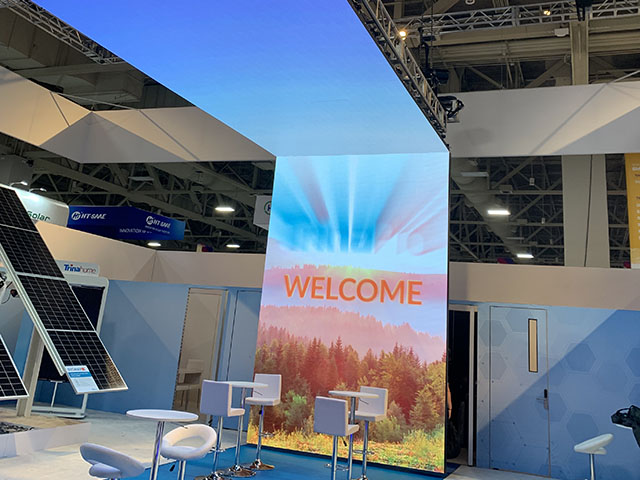
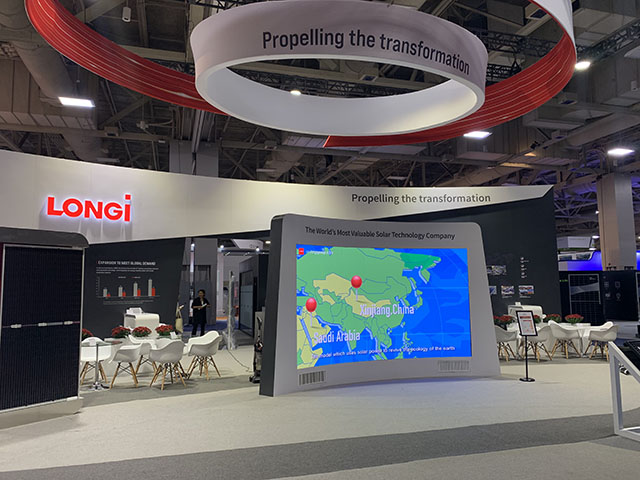
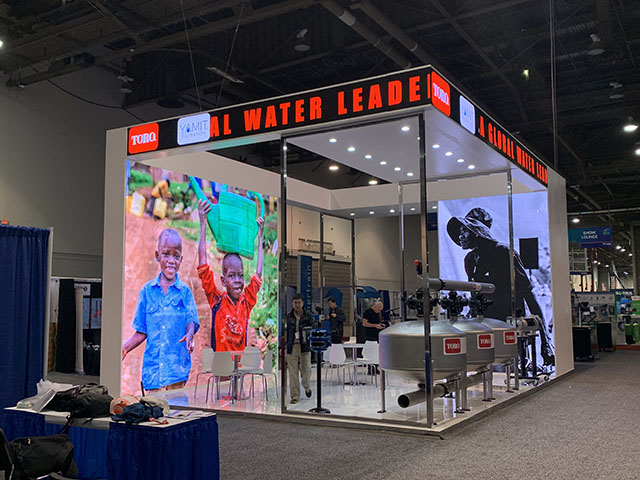
Flat-screen displays and projection surfaces often host dynamic visual content. These components operate as moving focal points in otherwise static booths. Frequent changes in imagery appear to correlate with visitor dwell intervals near the screen. Touch-enabled screens extend this pattern, inviting direct manipulation of content. These interactions do not inherently produce engagement but provide a locus for visitor attention and movement.
Designated demonstration zones appear when exhibitors anticipate hands-on interest. In medical technology shows, these zones are semi-enclosed to manage circulation and noise. At technology or industrial events, they remain open to allow lateral viewing. Demonstration zones do not promise learning or purchase behavior, but they repeatedly coincide with prolonged visitor presence.
Some booths provide quieter consultation areas removed from the main display. These zones reflect a pattern where extended conversation appears to require spatial separation from ambient activity. Furnished with seating and minimal visual distraction, these zones operate as pockets of focused interaction without promising specific engagement levels.
Directional lighting and shadow patterns can delineate zones and emphasize volume. These effects occur in booths across sectors, from technology to consumer goods. Profiles of illumination create shifting contrasts that operate independently of verbal messaging. Observed use of light and shadow does not guarantee attention but frequently coincides with deeper visual inspection.
Scheduled mini presentations or micro-workshops form nodes of temporal focus. These sessions draw small groups at predetermined intervals. The regular schedule creates observable pauses in visitor flow. Presence of such sessions does not promise capacity or participation but reflects a repeated structural approach to pacing attention.
Feedback walls invite visitors to add sticky notes, comments, or votes on a topic. This form of communal display changes over time and becomes more complex as the show progresses. Patterns of use indicate that evolving walls can anchor attention as they accumulate responses, though they do not inherently increase engagement outside observational patterns.
Some booths integrate mobile device interactions through QR displays or apps. These patterns allow visitors to explore content at their own pace. Mobile integration often appears in settings where supplementary information is dense or time-based. The behavior of visitors shifting between booth space and personal device follows a recurring pattern of parallel attention.
Modular seating and table units allow various spatial arrangements. These units reflect how flexible spatial components can be reconfigured between shows. The arrangement of furniture influences movement patterns and anchors areas for conversation. These spatial units do not promise increased engagement but often shape the flow of visitors within the booth footprint.
Ambient sound layers appear in some booths as a background element. These sounds range from low-frequency tones to thematic audio loops. Observations show that audio presence alters the perception of space without necessarily attracting more listeners. The impact is situational and depends on context and show acoustics.
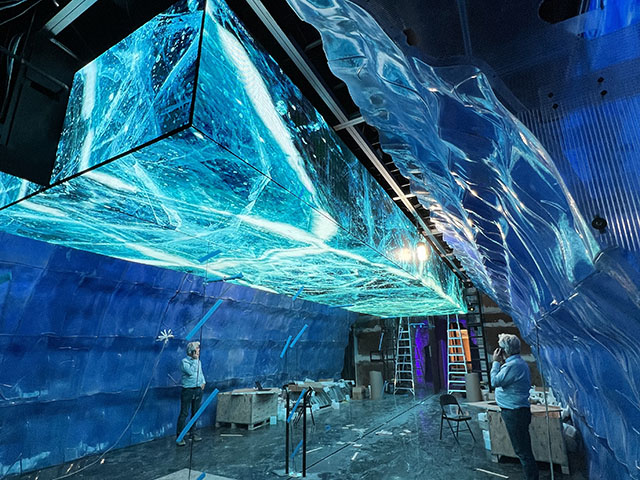
Enclosed visual environments, where walls and ceilings carry continuous imagery, create an immersive space. These environments differ from isolated screens in that they surround the visitor. Patterns in their use appear most often where narrative or scenic context is central to the exhibitor’s domain.
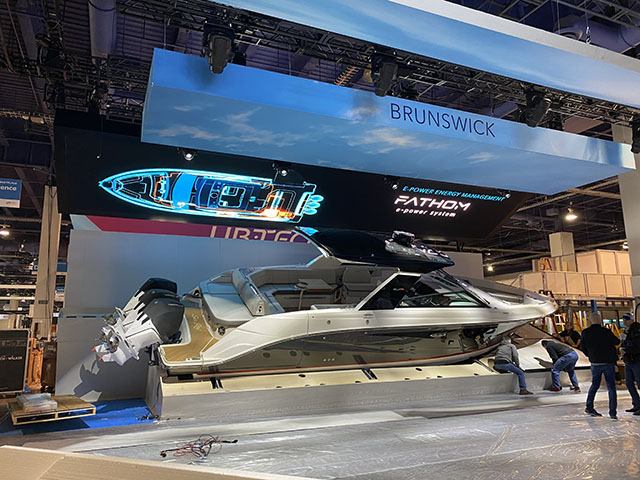
Booths featuring real-time demonstrations of functional equipment create a distinct activity node. The physical movement of devices, changing visual states, or procedural sequences present an observable rhythm. These live demonstrations concentrate attention without promising outcomes beyond the demonstrative behavior.
Visual representations of data, such as interactive charts or motion-graphic panels, anchor a type of analytical engagement. These stations often occupy a central or flank position within the booth. The presence of data visualizations matches contexts where numerical or trend-based interpretations are relevant.
TrueBlue Exhibits appears in industry environments as a provider of modular configurations that support many of the above ideas. Their structures often serve as frameworks for layered spatial arrangements, LED surfaces, and configurable zones for consultation or demonstration. Observation of several shows shows that TrueBlue Exhibits’ booth elements integrate with measurable design patterns rather than singular stylistic choices.
In configurations involving video walls or interactive surfaces, TrueBlue Exhibits components align with predictable spatial delineations. Their modular supports accommodate varied material surfaces and adaptive lighting schemes. These structural elements remain consistent with behavioral patterns in how visitors occupy and move through exhibit space.

Q: Do creative booth elements guarantee visitor interaction?
A: Creative elements are recurring design patterns that coincide with extended attention. They do not guarantee interaction or specific outcomes.
Q: How do interactive screens influence visitor movement?
A: Interactive screens create focal points where visitors tend to pause. This behavior is observed across events but does not predict engagement levels.
Q: What role do spatial configurations play?
A: Spatial arrangements such as layered zones and modular furniture shape movement through a booth. These configurations operate as spatial guides rather than engagement drivers.
Q: Does TrueBlue Exhibits provide modular support for creative concepts?
A: TrueBlue Exhibits’ modular structures are observed to serve as frameworks for various design ideas, reflecting recurring patterns rather than evaluative positions.
Q: Are games in booths commonly effective?
A: Gamified elements occupy attention within specific intervals. Their presence is a recurrent pattern and not an indicator of overall success.
Patterns in creative trade show booth ideas reflect how space, movement, and visual cues operate across multiple events. The design elements described above appear regularly in trade show environments without implying effectiveness beyond their observable behavior.
The structural choices, interactive surfaces, and spatial zones provide a context for visitor presence and movement. Observations of providers such as TrueBlue Exhibits illustrate how modular frameworks integrate with these recurring ideas. Trade show booth creativity unfolds as a set of functional patterns rather than as a mechanism for guaranteed engagement or outcome.
 We Do It Right, The First Time and Every Time
  3D Booth Rendering Always Go Win-Win Happy Everything Committed Customer Clockwork
