


You’ve invested thousands in your custom trade show booth, secured prime floor space, and designed eye-catching graphics. But here’s the reality: 80% of what attendees remember most about your booth is their interaction with your staff, according to the Center for Exhibition Industry Research (CEIR). Yet more than 50% of exhibitors rarely or never conduct staff training before their shows.
That disconnect costs exhibitors millions in lost leads every year. When hundreds or thousands of prospects walk past your booth at major trade shows, untrained staff become overwhelmed, miss opportunities, and damage your brand reputation. The good news? Proper preparation transforms your team into your most valuable asset on the show floor.
We’ve seen firsthand how well-trained booth staff can turn a busy trade show into a lead-generation machine. At TrueBlue Exhibits, we work with clients exhibiting at everything from intimate regional shows to massive Las Vegas conventions, and the staffing lessons remain consistent across all booth sizes. Whether you’re managing a 20′ x 20′ booth or a 20′ x 30′ display, your team needs specific skills to handle high-traffic environments effectively.
Table of Contents
Before training begins, determine how many team members you actually need. An industry rule of thumb suggests allocating 50 square feet per staffer. For a 10′ x 10′ booth (100 square feet), plan for two to three team members maximum. Overcrowding creates a cramped, uninviting space that repels attendees rather than attracting them.
Next, calculate your booth’s interaction capacity. Multiply your total exhibiting hours by the number of staff on duty, then by your target interactions per hour per person. Conservative targets aim for three to five interactions per hour. If your three-day show runs eight hours daily, that’s 24 total hours. With three staffers, you have 72 staff hours. At four interactions per hour, your booth can handle up to 288 meaningful conversations. If you expect significantly more traffic, adjust your staffing levels accordingly.
The math helps, but the quality of those interactions depends entirely on preparation. TrueBlue Exhibits recommends starting staff training at least two weeks before show day, with a final review session the evening before the exhibition opens.
Your team can’t hit targets they don’t know exist. Begin training by establishing specific, measurable objectives. Instead of vague goals like “get more leads,” define exactly what success looks like: “Collect 150 qualified contacts with decision-making authority and budget confirmed” or “Schedule 20 post-show product demonstrations.”
Explain the investment behind the show. When staff understand that exhibiting at a major trade show might cost $50,000 or more in booth space, design, shipping, and accommodations, they grasp the stakes. Share the cost-per-lead calculation. If you’re spending $40,000 and targeting 200 qualified leads, each conversation potentially represents $200 in marketing investment.
Clearly outline behavioral expectations in writing. Cover basics like dress code, arrival times, break rotations, and technology protocols. Address the non-negotiables: no eating in the booth, no phone scrolling during show hours, no sitting unless assisting a visitor, no clustered conversations with coworkers that create barriers to attendee engagement.
We’ve learned that exhibitors who document these expectations and have team members sign off on them see measurably better booth performance. The written acknowledgment transforms general guidelines into professional commitments.
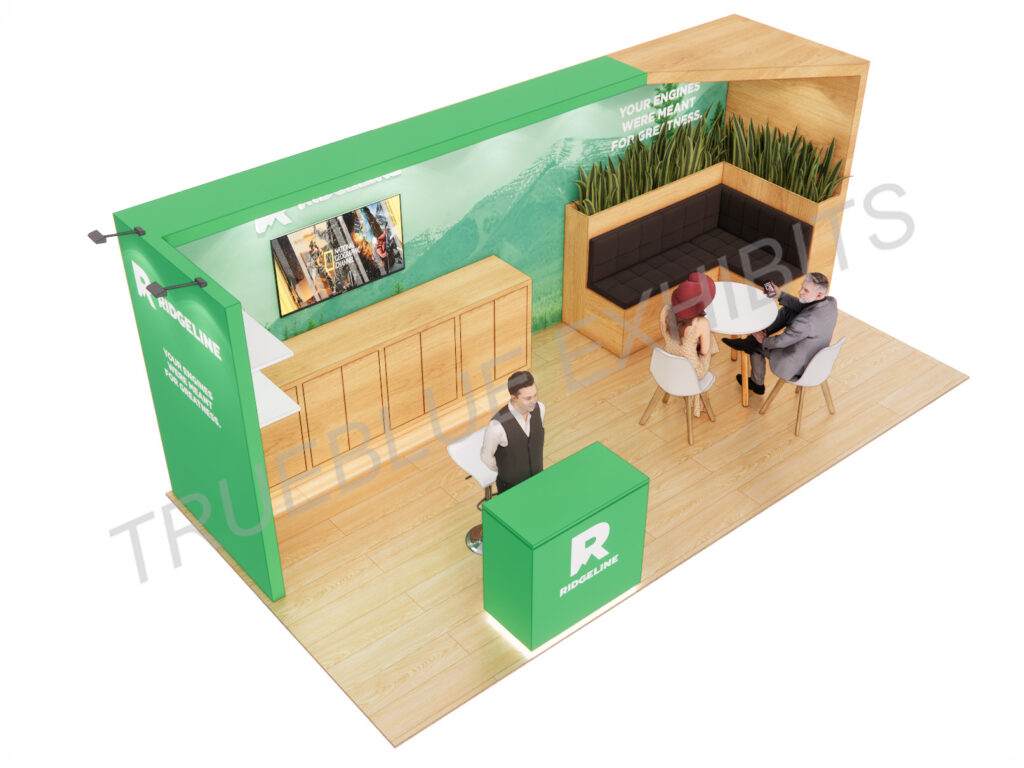
A high-traffic booth operates like a well-choreographed performance, not a free-for-all. Confusion about roles leads to overlapping conversations, ignored prospects, and gaps in coverage. Define clear positions before your team hits the floor.
Greeters position themselves near aisle-facing edges of your booth. Their job is simple but crucial: make eye contact, smile, and initiate conversations with passersby. They invite people into your space but don’t deliver full presentations. A greeter’s opening line might be, “Have you explored virtual training platforms before?” or “What brings you to the show today?”
Qualifiers take over after initial engagement. These team members ask targeted questions to determine if a prospect fits your ideal customer profile. They separate serious buyers from casual browsers efficiently and respectfully. Questions might include, “What challenges are you currently facing with your existing system?” or “What’s your timeline for making a decision?”
Product experts handle detailed demonstrations and technical questions. These staffers know your offerings inside and out and can articulate benefits rather than just features. When an attendee asks about integration capabilities, your expert doesn’t just confirm the feature exists but explains how it saves the customer three hours weekly.
Closers move qualified prospects toward the next step, whether that’s scheduling a follow-up meeting, processing an order, or capturing detailed contact information for the sales team. They recognize buying signals and know when to ask for commitments.
Designate one person as booth captain to oversee flow, handle unexpected situations, and make real-time adjustments. When technology fails or crowds surge unexpectedly, the captain redirects team members and maintains order.
For Las Vegas trade show booth rentals specifically, we recommend having your booth captain arrive 30 minutes early each morning to conduct quick team huddles and review the day’s goals.
Body language communicates as much as words on a crowded trade show floor. Train your staff to project approachability from 30 feet away. Crossed arms, hunched shoulders, and downward gazes signal disinterest. Open posture, genuine smiles, and head-up positioning invite interaction.
Eye contact matters enormously. Staff should acknowledge every person who glances toward your booth, even if they’re engaged with another conversation. A simple nod or smile keeps prospects from walking past to your competitor.
Strategic positioning prevents the dreaded “booth barrier” effect. When team members cluster together chatting, they create an invisible wall that repels attendees. Position staff members near different entry points to your space, maintaining at least six feet between them during slow periods.
The 15-second rule determines success or failure at high-traffic shows. Research shows attendees decide whether to engage within 15 to 20 seconds of approaching your booth. Staff must initiate contact quickly and warmly. “Thanks for stopping by” beats silence every time.
Teach your team to read attendee body language. Someone walking purposefully with arms full of materials isn’t ready for a detailed conversation. A person slowing down while reading your graphics signals interest. An attendee who makes eye contact wants acknowledgment.
Phone discipline separates professional booths from amateur ones. Establish a zero-tolerance policy for personal phone use during show hours. If staff need to check messages, take calls, or scroll email, they step away from the booth completely. Visitors immediately perceive divided attention and move on.
In high-traffic environments, you have seconds to capture attention. Every team member needs a polished, conversational elevator pitch that communicates your value proposition clearly. The pitch should answer three questions: What do you do? Who do you help? Why does it matter?
Avoid jargon-heavy opening lines like “We provide enterprise-level SaaS solutions for multi-channel attribution modeling.” Instead, try something human: “We help marketing teams figure out which campaigns actually generate sales, so they stop wasting budget on channels that don’t work.”
The pitch should naturally lead to a question that invites dialogue. “What’s your biggest challenge with tracking marketing ROI right now?” opens conversations better than launching into a product demo.
Practice until the delivery sounds natural, not scripted. Have team members practice with each other during training, then record themselves. Most people don’t realize they speak too quickly or use filler words until they hear playback. Role-playing exercises help tremendously. One person plays a skeptical prospect, another delivers the pitch, and a third observer provides feedback.
TrueBlue Exhibits typically recommends creating three versions of your pitch: the 30-second version for initial contact, a two-minute version for qualified prospects who show interest, and a five-minute version for serious buyers ready to explore details.
Reading about booth strategies differs vastly from executing them under pressure. Role-playing bridges that gap. Set up realistic scenarios your team will encounter and practice responses.
Scenario one: The skeptical buyer. “We already have a vendor we’re happy with.” How does your team respond? They shouldn’t argue or disparage competitors. Instead: “That’s great you’ve found a good fit. Out of curiosity, is there anything you wish your current solution did differently?”
Scenario two: The budget-conscious prospect. “This looks expensive.” Rather than getting defensive, qualified staff pivot: “I understand budget matters. What specific ROI would make this investment worthwhile for you?”
Scenario three: The time-crunched attendee. “I only have two minutes.” Your team should respect that constraint: “Perfect. Let me show you the one feature that’s saving our clients an average of five hours weekly.”
Scenario four: The technical deep-dive. Someone asks a complex question nobody can answer on the spot. Train staff to respond honestly: “That’s a great technical question. Let me connect you with our senior engineer who can give you the detailed answer you need.”
These exercises reveal gaps in product knowledge, uncomfortable moments that need coaching, and opportunities to refine messaging. Video record practice sessions when possible so team members see themselves from an attendee’s perspective.
Even the most knowledgeable staff can’t remember every product specification, pricing tier, or technical detail under pressure. Create laminated quick-reference cards that fit in a pocket or sit discreetly at your booth stations.
These cheat sheets should include key talking points, common objections with proven responses, product benefit statements, competitive comparisons, special show promotions, and qualification questions. Keep information visual and scannable. Bullet points work better than dense paragraphs when someone needs to reference material mid-conversation.
Digital tools matter equally. Ensure every staff member thoroughly understands your lead capture technology before the show opens. Practice scanning badges, entering custom notes, and flagging priority follows-ups. Technology that confuses staff during live interactions kills momentum and frustrates prospects.
If you’re incorporating LED video wall rentals into your booth design, make sure at least two team members can troubleshoot basic issues like content switching, volume adjustment, and display resets. Nothing derails booth flow faster than staff fumbling with malfunctioning technology while prospects wait awkwardly.
High-traffic shows present unique pressures. When crowds flood your booth simultaneously, staff need strategies to manage volume without sacrificing quality.
Teach the art of the graceful handoff. When multiple prospects arrive during a single conversation, trained staff acknowledge newcomers immediately: “I’ll be with you in just two minutes” or “My colleague Sarah will help you right away.” Then they signal to available team members.
Implement a priority system for lead qualification. Not every conversation deserves equal time during peak traffic. If you’re speaking with someone who’s “just browsing” while a VP with purchasing authority waits, your team needs permission to politely transition: “I don’t want to take up your time if you’re still in early research phase. Here’s my card and our website. May I introduce you to my colleague who can point you toward our resource library?”
Establish rotation schedules that prevent burnout. Trade shows exhaust even the most energetic personalities. Three eight-hour days standing, presenting, and engaging drains everyone. Build in structured breaks where team members step away completely to rest, hydrate, and mentally recharge. A 15-minute break every two hours maintains energy levels far better than powering through entire days.
Create a system for handling the inevitable difficult encounters. When prospects become argumentative, intoxicated, or inappropriate, staff need clear protocols. Designate who makes the decision to disengage and how to do so professionally.
Lead generation means nothing without effective follow-up. Before the show ends, clarify who contacts which prospects and when. Divide leads by geography, industry, sales funnel stage, or product interest. Prevent the disaster of multiple team members reaching out to the same contact or, worse, nobody following up at all.
The best practice involves same-day or next-day follow-up for hot leads. Someone who requested a proposal or expressed immediate buying interest shouldn’t wait a week to hear from you. Schedule time during or immediately after the show for priority outreach.
For medium-priority leads, aim for follow-up within three to five business days while the show remains fresh in their minds. Lower-priority contacts still deserve acknowledgment within two weeks, even if it’s just a brief email and resource link.
Document a simple note-taking system during the show. Staff should capture specific details about each conversation beyond basic contact information. “Mentioned Q1 budget approval” or “Currently evaluating three vendors” provides essential context for effective follow-up.
Trade shows rarely go exactly according to plan. Equipment fails. Key staff members get sick. Traffic patterns shift unexpectedly. Products malfunction during demonstrations.
Train your team to handle curveballs calmly and professionally. When your booth’s internet connection drops mid-demo, does your team panic or smoothly pivot to an offline presentation? When a competitor makes false claims about your product, do your staff engage in public arguments or professionally correct misinformation?
Build contingency plans for common disasters. What happens if your booth rental arrives damaged? Who has authorization to make on-site decisions? Where do backup materials live? Which team member contacts TrueBlue Exhibits if you need emergency support?
Weather delays, shipping problems, and last-minute show floor changes happen regularly. Teams that prepare for these scenarios handle them with minimal disruption. Teams that don’t often implode under unexpected pressure.
Well-trained staff still need motivation to perform at their peak throughout long shows. Gamification often works remarkably well. Create competitions with prizes for most qualified leads, best email capture rate, or highest customer satisfaction scores. Public recognition during evening team debriefs celebrates top performers and drives healthy competition.
Share success stories in real-time. When a team member closes a significant deal or receives exceptional feedback, announce it to the whole booth during breaks. Positive momentum builds on itself.
Provide incentives beyond bragging rights. Consider bonuses tied to lead volume or quality, gift cards for top performers, or extended time off after particularly demanding shows. The investment in motivation pays dividends in booth performance.
Make the experience enjoyable. High-energy music during setup, team meals at quality restaurants, and genuine appreciation for hard work foster camaraderie. When your staff genuinely enjoy representing your company, that enthusiasm radiates to prospects.
We’ve spent over a decade helping clients maximize their trade show investments through comprehensive booth solutions. Our experience across thousands of shows reveals one consistent truth: booth design matters tremendously, but trained staff determine whether you generate hundreds of qualified leads or waste your entire marketing budget.
The most successful exhibitors we work with start staff preparation weeks before show day. They role-play scenarios, practice with technology, review product knowledge, and establish clear performance metrics. They invest in training with the same seriousness they bring to booth design and logistics.
When you combine TrueBlue Exhibits’ professional booth design services with a properly trained team, you create an environment where leads naturally flow. Your booth attracts attention through strategic design and LED video walls, but your people convert that attention into meaningful business relationships.
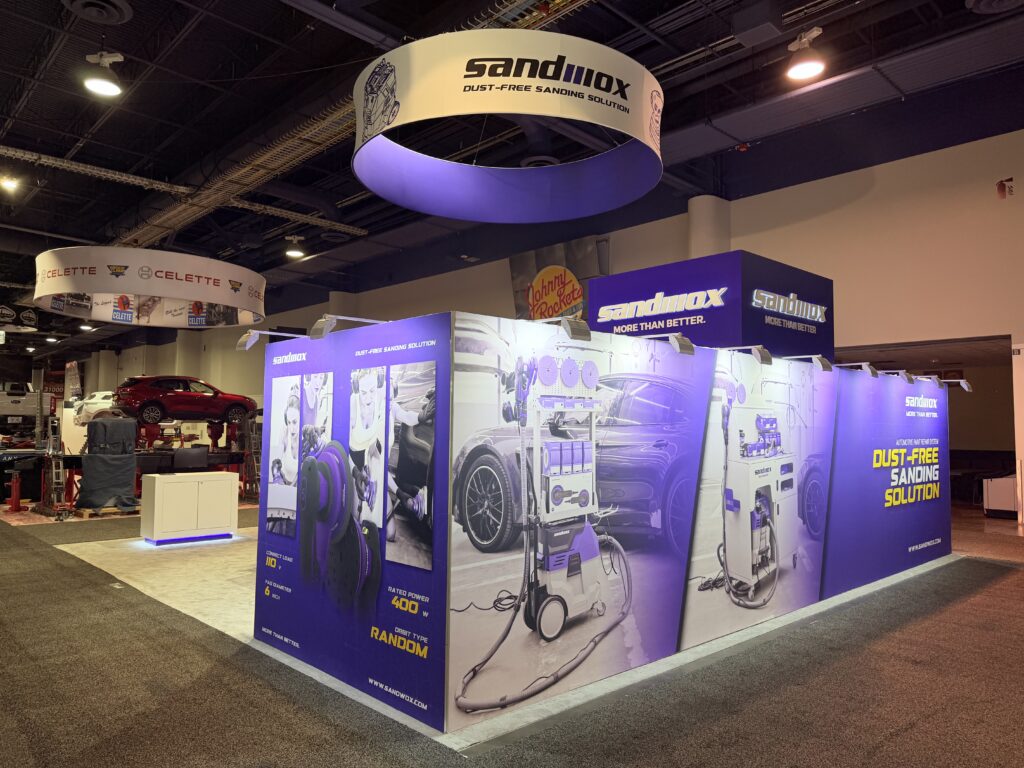
Staff training represents one of the highest-ROI investments you can make in your trade show program. While the CEIR reports most companies spend only 1-2% of their trade show budgets on training, exhibitors who prioritize staff preparation consistently outperform competitors spending far more on booth space and design.
Start your preparation now, not the night before your show opens. Create role definitions, develop training materials, practice presentations, and set clear expectations. The difference between mediocre and exceptional booth performance often comes down to these fundamentals.
Need help creating a booth environment that sets your staff up for success? TrueBlue Exhibits specializes in turnkey trade show solutions that combine strategic design with practical functionality. From our Las Vegas facility, we serve exhibitors at shows nationwide, providing everything from initial booth design to on-site installation and support.
Your investment in the right booth deserves an equally strong investment in the people who represent your brand. Contact TrueBlue Exhibits today to discuss how our comprehensive approach to trade show success can help you generate more leads, close more deals, and maximize every dollar you spend on exhibitions. Let us help you create an environment where your well-trained team can truly shine.
 We Do It Right, The First Time and Every Time
 3D Booth Rendering
 Always Go
 Win-Win Happy
 Everything
  Committed
  Customer
 Clockwork